South African College of Applied Psychology
Graduate Diploma in Counselling
Stellenbosch University
B Comm (Ind Psych)
APA International Affiliate
Reg 97099236
PsySSA Member
Reg PSY7907

Experience and Background
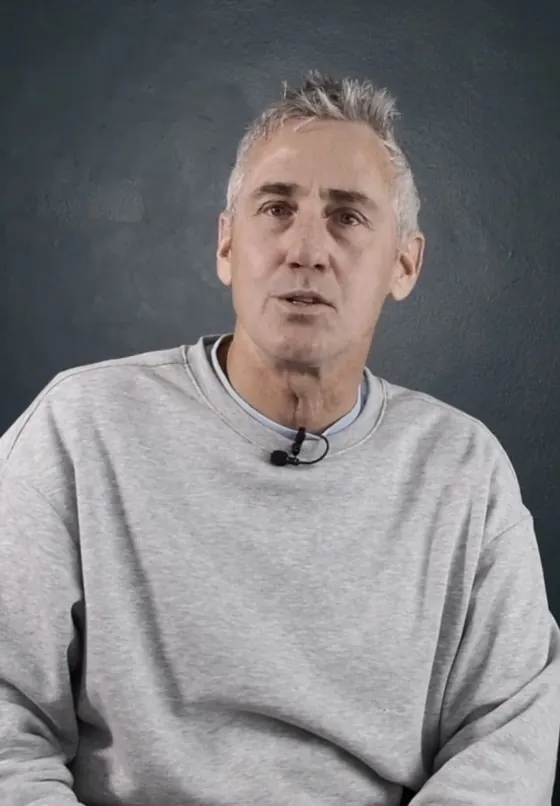
- Therapist & Counsellor (Since 2010 in Stellenbosch)
- Integrated Life Counselling & Therapy (Private Practice)
- Online Counselling and Support
- Interpersonal Sessions by Zoom / Clinical Outpatient Program
- Senior Counsellor & Program Manager
- Kenilworth Clinic (Akeso) Cape Town SA — Dual Diagnosis
- Crisis & Trauma Counsellor (NGO)
- Safe House for Victims of Domestic Violence & Human Trafficking
- Counsellor, Group Therapist & Psych Ed Lecturer
- Rustenburg Momentum Mental Health Care Clinic (Dutch)
- Trauma and Addictions Counsellor, Group Therapist, Lecturer
- Affect2U Clinic (Belgium – Individual and Family Counselling)
My Philosophical Approach to Therapy
Therapy should take its shape from you: your story, your needs and what you are hoping to change, rather than from a diagnosis or a set treatment plan alone. I don't work from a fixed script. Theory and technique have their place, but on their own they can miss what matters most. Understanding, change, healing and growth happen through a relationship built on care, respect and real connection.
Our Therapeutic Relationship

No lasting, meaningful change can emerge from a therapeutic space in which honesty, love, care, trust and mutual respect are not at the heart of the relationship between client and therapist. Through this connection and support, we share and explore feelings of sadness, frustration, anger, guilt and other distressing emotions. Yet, importantly, the therapeutic hour is often filled with feelings of hope and relief, moments of humour, and the recognition of progress through change.
Trust is what makes change possible. Only within a relationship we trust do we become willing to take risks: to say out loud the thoughts we have kept to ourselves, to disclose what might feel shameful or frightening, and to look honestly at the choices we are making. Taking that risk can be uncomfortable for a while.
Not taking it keeps us where we are, and the cost of staying there is measured in something we cannot get back: our time. Of all the regrets I encounter in this work, lost time is often the heaviest to carry.
That is why I place so much emphasis on building a relationship in which you feel safe enough to share what is difficult. It is where the real work begins.
DO YOU
OFTEN FEEL THAT...
- Your life seems to be devoid of purpose.
- You are no longer excited by what you used to love doing.
- You resort to self-harming or self-defeating behaviours to escape emotional pain, or certain realities.
- You tend to avoid people and events.
- You feel emotionally disconnected or isolated.
- You feel trapped, unable to escape aspects of your life, with a sense of meaninglessness.
- You experience anxiety, or perhaps you feel depressed at the possibility of never experiencing a sense of feeling fulfilled.
- You are falling behind, or feel overwhelmed by too many responsibilities all at once.
Do you hold the belief that asking for help reflects personal weakness ...?
Asking for help requires courage. It is the first step towards change and growth — a more meaningful and purpose filled way of living.
Understanding Life's Challenges







Life is difficult. This is a great truth, one of the greatest truths. It is a great truth because once we truly see this truth, we transcend it. Once we truly know that life is difficult — once we truly understand and accept it — then life is no longer difficult. Because once it is accepted, the fact that life is difficult no longer matters. M. Scott Peck, author of "The Road Less Traveled"
For many years these words meant little to me — the first time I read them, I put the book down. By most measures, the first half of my life was expansive, and diverse in experiences: studies, backpacking and travel, healthy friendships, love of nature and life outdoors, generally healthy in body and mind, and at the end of my twenties, marriage and children. The one exception was my career and working life. I had built a successful business, but it was chosen under the weight of expectation from my family of origin, and it held little meaning for me.
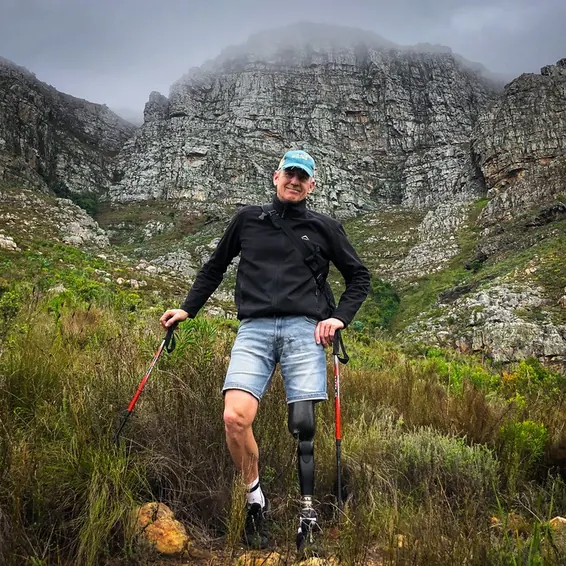
Beneath it all, I held onto inherited views I had never truly examined: that life is predetermined, that external realities dictate my choices, and that struggling with any aspect of my life implied weakness and a lack of gratitude. A flying accident exposed them. My life became far more limited, and I found myself entering the second half of life in an existential void — one I tried to numb with self-destructive choices, which only prolonged my search for insight, clarity and, ultimately, change.
Only once I was driven by sheer desperation did I make a different choice — a predicament I could have avoided by finding the courage and humility to ask for, and more crucially, accept help.
When I was challenged to change myself, and to stop my futile attempts to re-arrange reality, my life changed remarkably. I have since learnt that there is no shame or weakness in struggling with life's challenges — they are merely obstacles to be accepted as life's realities.
Out of this came a realisation I have fully embraced: "the world must nothing, people must nothing" (Mutual Non-Obligation, a reading in Client Resources). I alone am responsible for the conduct and outcome of my life. This was the day my life became authentic, filled with purpose, and my personal struggles were flooded with meaning. This was when a calm sense of curiosity about all my life encounters returned.
This is not a claim that we can do without one another. Connection, care and love matter more than anything else here — which is precisely why they cannot be owed. The moment we start keeping an invisible account of what is due to us, we have left the relationship and entered a transaction.
Today, I live my life according to the truth that my choices are my responsibility, that accepting and assuming this responsibility has released me from a life I had once constructed for myself, a life built on fearfulness of change, and avoidance of challenging rigid societal expectations and institutionalised dysfunction.
These are some of the principles I bring into the therapeutic process — a process informed by my own life experiences and struggles, and by the rewards of self-reflection and change that I have experienced first-hand: a life lived with greater authenticity, purpose, and a renewed curiosity. It is further shaped by my studies, reading and research, and by extensive work as a counsellor and therapist in clinics, as well as in private practice.
I love my work and I cherish the occupational privilege. I feel an immense amount of gratitude toward those who have, and continue to, contribute to a meaningful life experience. More than anything I value the shared trust I experience with my clients during every therapeutic hour.
We are fellow travellers.
MOST
PREVALENT STRUGGLES ...
- Self-esteem & identity.
- Relationships & family. Inter-personal communication.
- Anxiety & depressed mood.
- Lack of meaning & purpose.
- Fear of, and resistance to, change.
- Self-destructive behaviour in an attempt to avoid difficult feelings.
- Processing trauma.
- Dealing with feelings of guilt.
- Alcohol abuse & addictions.
- Partners in controlling relationships.
- Student anxieties & relationship struggles.
- Parental concerns for young people.